
Security Cameras vs. Security Guards: What Texas Jobsites Really Pay
November 2026 · 6 min read · Virtual Protective team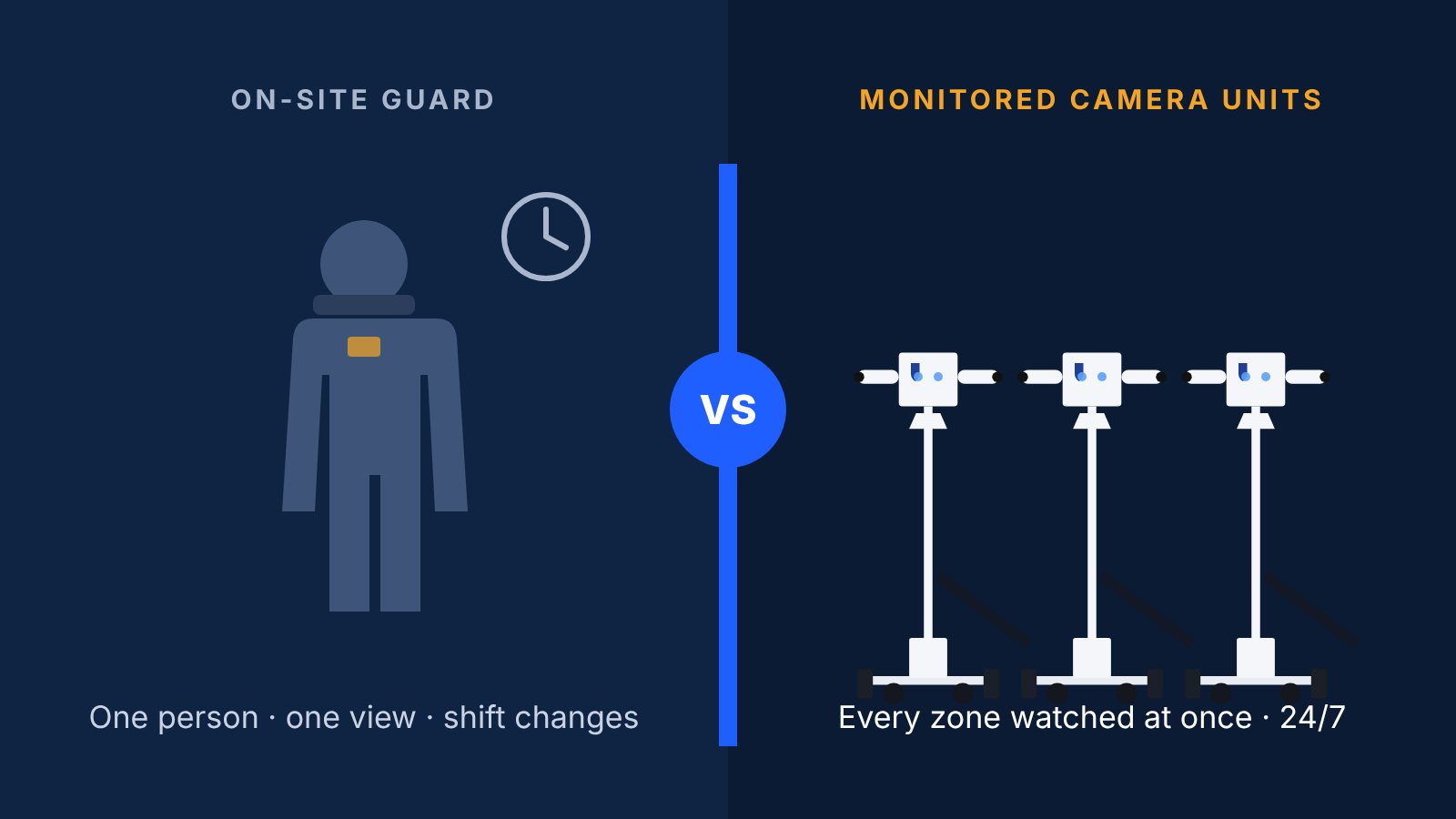
For most Texas jobsites, monitored camera units cost a fraction of an on-site guard while watching every protected area at once. Staffing one guard post around the clock takes about 730 paid hours a month, which comes to more than $12,300 in wages alone at the San Antonio-area median, before agency fees, overtime or insurance.
The real cost of a 24/7 guard post
Round-the-clock coverage means someone is on site 24 hours a day, 365 days a year. That works out to roughly 730 hours every month. The median wage for security guards in the San Antonio–New Braunfels metro is $16.96 an hour, according to the latest federal wage data, so one guard post costs more than $12,300 a month in wages alone.
That figure is only the floor. Guard companies add their own margin for scheduling, supervision, insurance and payroll taxes. Holidays and overtime push the cost higher, and larger sites often need more than one guard to cover multiple gates, laydown areas and buildings.
What one guard can and can’t see
Even a great guard can only be in one place at a time. While they patrol the north fence, the south gate is unwatched. Long overnight shifts lead to fatigue, and guards are often told not to confront intruders, which means the best they can do in many cases is call the police and wait.
How monitored camera units work instead
A monitored camera system watches every protected area at the same time. Here’s what happens when someone enters your site after hours:
- AI threat detection flags people and vehicles in protected zones and filters out wind, animals and headlights.
- A live operator in our USA command center verifies the threat within moments.
- Deterrents kick in: sirens, strobes or a live voice through the talk-down speaker telling the intruder they’re on camera.
- If the intruder doesn’t leave, the operator dispatches police with a verified, in-progress report.
- HD video and license plate photos are saved as evidence for police and insurance.
The results: a 97% reduction in loss
Across the sites we protect, our internal data shows a 97% average reduction in loss. The losses that do occur are small, because thieves can’t take much before police arrive. To date, our command center has dispatched police 337 times.
Cost matters too. Because several compact units can cover the same ground as one large trailer, our solution typically protects your entire perimeter for 30–50% less than many competitors’ trailer-based systems, and for a fraction of what a 24/7 guard post costs.
When a guard still makes sense
Guards are valuable when you need a person to check badges, manage deliveries during working hours or control a busy gate. Many of our customers use both. Cameras cover the whole site 24/7, and a guard handles daytime access. When you want boots on the ground, we can partner with local guard companies so everything works together.
The bottom line
If your goal is to stop theft at night and on weekends, monitored camera units give you more coverage, faster response and a recorded trail of evidence for a fraction of the cost of a full-time guard. We’ll walk your site for free and show you exactly where the cameras would go.
Sources
- U.S. Bureau of Labor Statistics, Occupational Employment and Wage Statistics (May 2025), security guards, San Antonio–New Braunfels metro, via WageDex · wagedex.com
- Virtual Protective internal loss and dispatch data (unpublished)